
The working principle of a non - programmable thermostat
author: Lily
2025-03-21
The working principle of a non - programmable thermostat
Non - programmable thermostats, with their uncomplicated design, are essential in keeping indoor environments at a pleasant temperature. Delving into their operational mechanisms not only demystifies these devices but also showcases their reliability and practicality in everyday use.
Temperature Sensing Mechanisms
Bimetallic Strips
A common temperature - sensing component in non - programmable thermostats is the bimetallic strip. Composed of two different metals, such as copper and iron, bonded together, each metal has a distinct coefficient of thermal expansion. When exposed to temperature changes, one metal expands or contracts at a different rate than the other. For instance, as the ambient temperature rises, the metal with a higher coefficient of thermal expansion (like copper) will expand more rapidly than the other. This differential expansion causes the bimetallic strip to bend. The bending action is the key to triggering the thermostat's response.
Liquid - in - Glass Thermometers
Another type of temperature - sensing element found in some non - programmable thermostats is the liquid - in - glass thermometer. These typically use a liquid, such as mercury or a colored alcohol solution, enclosed in a glass tube. As the temperature changes, the liquid expands or contracts. In a warming environment, the liquid expands and rises up the calibrated glass tube. Conversely, in a cooling environment, it contracts and drops. This change in the liquid's position can be used to actuate a switch or provide a visual indication of the temperature.
Switching and Control Systems
Electrical Contacts
Connected to the temperature - sensing element is an electrical switching mechanism. In the case of a bimetallic - strip - based thermostat, when the strip bends due to temperature variations, it can either close or open an electrical circuit. When the temperature falls below the set point, the bimetallic strip bends in a way that brings two electrical contacts together, closing the circuit. This allows electricity to flow to the heating system, whether it's a furnace, a space heater, or a boiler. As the room warms up and the temperature reaches the set point, the bimetallic strip straightens, causing the electrical contacts to separate and breaking the circuit, thus turning off the heating system.
Mechanical Linkages
Some non - programmable thermostats use mechanical linkages to translate the movement of the temperature - sensing element into control actions. For example, in a thermostat with a liquid - in - glass thermometer, the movement of the liquid can be connected to a series of levers or gears. As the liquid level changes with temperature, these mechanical components are activated. They can then be used to open or close valves in a hydronic heating system or to adjust the speed of a fan in a forced - air heating or cooling system.
Set - Point Adjustment
Non - programmable thermostats are equipped with a means for users to set their desired temperature, known as the set - point. This is usually achieved through a simple dial or a slider. Turning the dial or moving the slider adjusts the position of a reference point relative to the temperature - sensing element. For example, if a user wants a warmer temperature in winter, turning the dial clockwise will move a small metal stop closer to the bimetallic strip. This effectively changes the point at which the strip needs to bend to close the electrical circuit for the heating system. The set - point adjustment mechanism allows users to customize the thermostat's operation according to their comfort preferences.
In conclusion, non - programmable thermostats, despite their lack of advanced programming features, rely on fundamental physical principles to provide reliable temperature control. Their straightforward design, encompassing temperature sensing, switching, and set - point adjustment, makes them a durable and user - friendly option for maintaining comfortable indoor temperatures in a variety of settings, from homes to small commercial spaces.


Two stage thermostat
What are the advantages of a non-programmable thermostat
Related Article
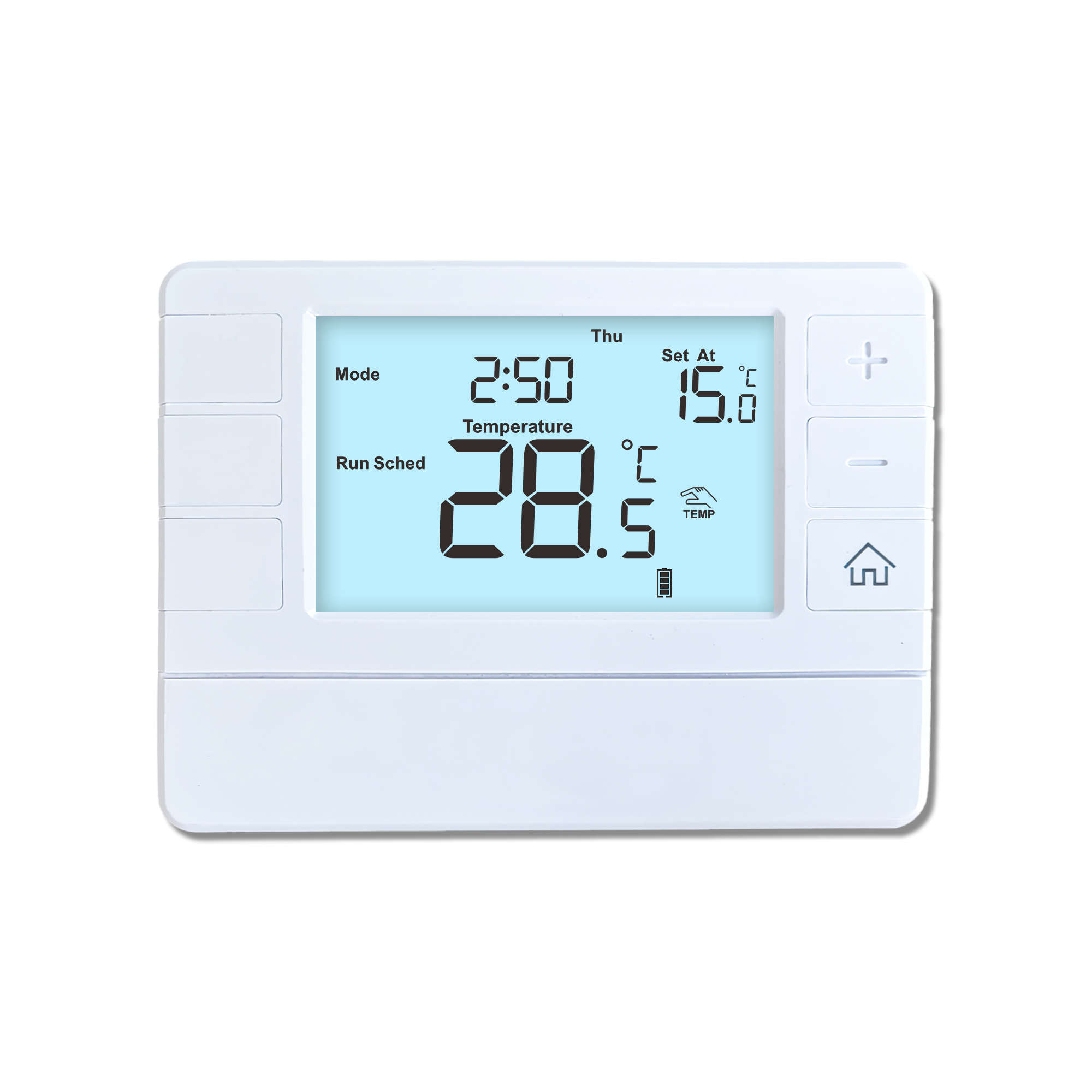
This shift has made traditional, manual thermostats obsolete, paving the way for advanced smart technologies.
Why You Need a Smart Thermostat
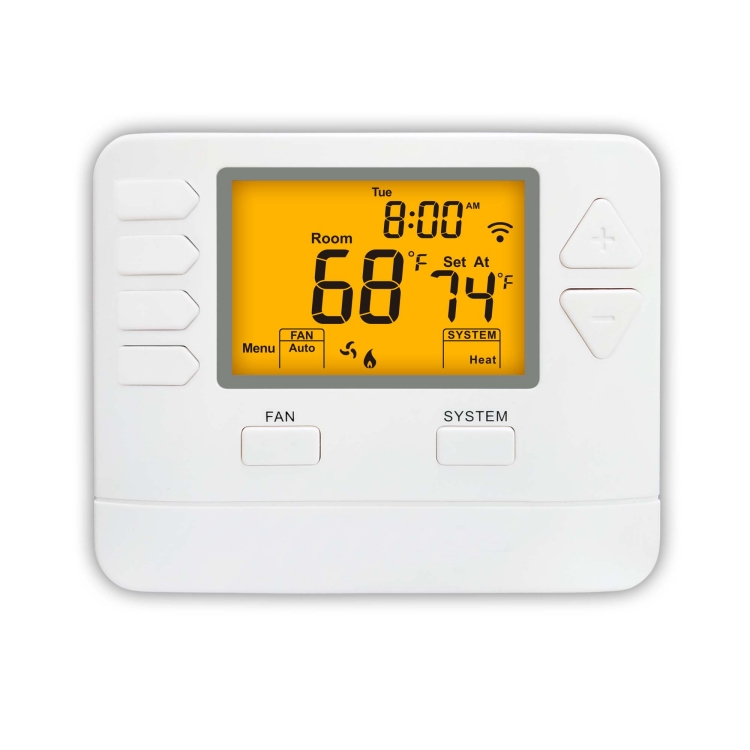
A true 7 Day programmable room thermostat offers the ultimate granular control. It allows users to program a distinct, customized heating and cooling schedule for every single day of the week.
How a 7 Day Programmable Room Thermostat Maximizes Home Comfort and Efficiency
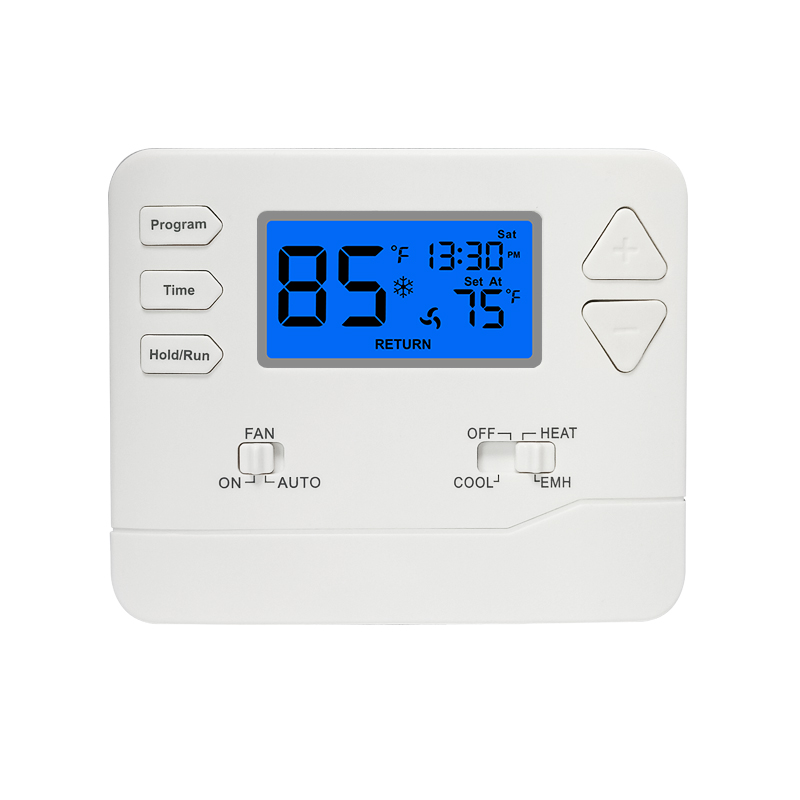
A premium Riseem thermostat is not just a digital display on your wall; it is the ultimate gatekeeper of your indoor environment.
Why a Quality Thermostat Is the Key to a More Comfortable Home
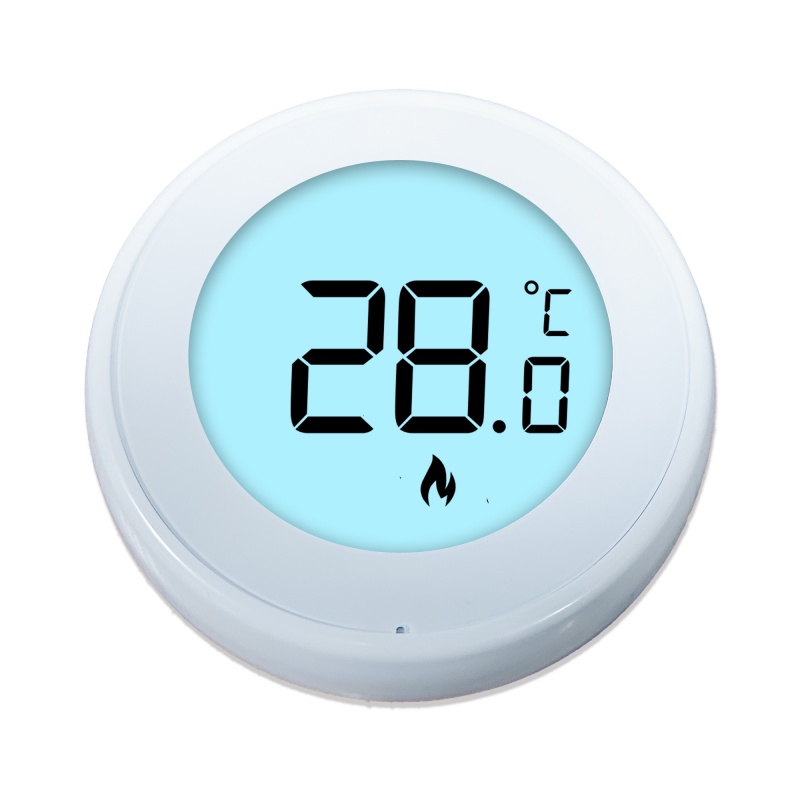
While the TUYA app provides the elegant interface, the physical thermostat remains the brain of the operation. Riseem has engineered a device that looks minimalist on your wall while delivering industrial-grade precision to your HVAC equipment.
Welcome to the Future of Home Automation The Ultimate Guide to TUYA WIFI Smart Thermostats